Risk of Rain 2: Beginner's Guide, Best Settings and Trainer Tips
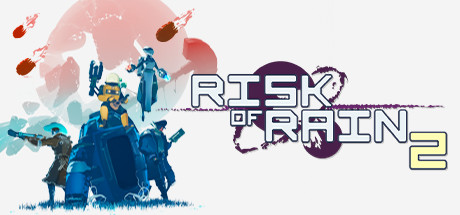
How runs scale in Risk of Rain 2, which survivor to start with, how items stack, which PC settings to lower first, and where trainer options fit in solo play.
How a Run Actually Works
Risk of Rain 2 is an action game built around runs. Each one takes you through randomized stages drawn from more than a dozen handcrafted locations, packed with monsters and large bosses. The rule that matters most for a beginner is scaling: you and the enemies both get stronger as the run goes on, with no cap. The pressure never levels off, so your power has to grow faster than theirs.
There are two ways to end a run. You can reach the final boss and escape, or keep going to see how long you last. Go for the escape on your first attempts and save endless play for builds you already understand. Stages, enemies and items are randomized every time, so a run that collapses early says more about what you were dealt than about your skill. Use it as a note on what to try next time.
Expect the first hours to be practice. You are learning how quickly the pressure builds, which enemies punish you for standing still, and how much healing and damage you need before a boss arrives. Once you see scaling as the real threat rather than any single enemy, early deaths become less common.
- Keep moving in fights; many enemies punish a survivor who stands still.
- Aim to escape on your first runs and try endless play later.
- After each death, note what killed you and what your build was missing.
- Use the Adjustable Difficulty option if early runs feel overwhelming.
Choosing Your First Survivor
You unlock a crew of eleven playable survivors as you play. Each has its own combat style plus alternate skills to swap in once unlocked. The Commando, one of the classic survivors, is a sensible place to learn movement, aiming and how items behave. Fellow veterans the Huntress and the Engineer, and newer arrivals MUL-T and the Captain, each fight in their own way, so plan for a short relearning period whenever you switch.
Stay with one survivor until you can clear the early stages reliably, then branch out. Test alternate skills one at a time so you can tell what actually changed. The roster has kept growing: the Alloyed Collective and Hallowed Concepts DLCs added content, recent patch notes mention a survivor called the Enforcer, and the developers have previewed a free base-game update with new survivor abilities.
- Start with the Commando to learn the basics before moving on.
- Change one alternate skill at a time so you can judge the difference.
- Play a few full runs with each new survivor before writing it off.
- Check survivor skills again after major patches, which often bring balance changes.
Items, Stacking and the Logs
More than 110 items turn up across runs, and they are the main way to keep pace with the enemies. What matters is how they stack. Effects combine as you collect more, and a pile of items can produce results bigger or stranger than any one of them suggests. Picking up what you can reach on each stage generally serves you better than sprinting ahead with a thin build.
With random stages and drops, you will rarely assemble the same set twice. Rather than hunting for one perfect combination, adapt to what each run gives you. The logs fill in as you encounter items, adding lore alongside practical notes. Reading an item's entry after you first find it is a quick way to understand what it does and what it might pair with.
- Collect items steadily; skipping pickups lets enemy scaling pull ahead.
- Read the log entry for any new item you pick up.
- Build around the items a run gives you instead of forcing one plan.
- Watch for combinations that can rescue a weak start.
Artifacts, Difficulty and Prismatic Trials
Artifacts are modifiers you unlock by uncovering their secrets, then switch on or off. The examples the game gives include friendly fire, random survivor spawns and changes to item selection. They are a good way to vary runs once the standard mode feels familiar, though several of them add risk or unpredictability. Leave them off until you can escape fairly often, because knowing the base rules makes each Artifact's effect much easier to read.
Difficulty is adjustable, and lowering it while you learn costs you nothing. The Prismatic Trials are a separate rotating challenge where players compete, and they favour people who already know the survivors and items. Treat them as a later goal. Because they pit you against other players, they are also off limits for trainers and other modifications.
- Switch Artifacts on one at a time so you know which rule changed.
- Lower difficulty while learning and raise it once escapes feel routine.
- Save the Prismatic Trials until you know several survivors well.
Playing Solo or in Co-op
Online co-op supports you and up to three friends. It can be a gentler way to learn, since a teammate can pull enemies away and cover your weak spots. It also puts far more on screen at once, which weaker PCs will feel. Groups tend to do better when survivors complement each other and players agree on how to share items instead of racing for every pickup.
Solo suits learning a survivor properly, because every fight is yours to handle. Full controller support and Remote Play on phones, tablets and TVs make couch play straightforward, and the game runs on the Steam Deck. A February 2026 update fixed Deck controls that players had reported were not working correctly, so keep the game updated there. Steam Cloud keeps your progress synced.
- Agree on item sharing with your group before the run starts.
- Mix survivor styles in co-op rather than doubling up.
- Learn new survivors solo first, then bring them to co-op.
- Update the game before Steam Deck sessions to get the controls fix.
PC Settings and Performance
The requirements are modest. Minimum is 64-bit Windows 7 or newer, an Intel Core i3-6100 or AMD FX-8350, 4 GB of RAM, a GTX 580 or AMD HD 7870, DirectX 11 and 4 GB of storage. The recommended spec raises the processor to an Intel Core i5-4670K or AMD Ryzen 5 1500X and the graphics card to a GTX 680 or AMD HD 7970, with RAM and storage unchanged. Both list a broadband connection, which matters most for online co-op.
The recommended graphics card is only a small step above the minimum, while the processor jump is bigger. As a run scales, enemies and effects pile up, so late stages can lean on the CPU harder than early ones. If you are near the minimum, start with the usual 3D action game cuts: shadows, post-processing and then resolution. Set any frame rate cap at a level you can hold late in a run, not just on the first stage.
A recommended-level PC should handle higher settings at a steady frame rate in normal play. Still, try a long endless run before settling on maximum settings. Smooth frames on a crowded screen are worth more than sharper shadows on a quiet opening stage.
- Lower shadows and post-processing before you drop resolution.
- Judge performance on late stages, not the first one.
- Close background programs on 4 GB systems to free memory.
- Use a wired connection for online co-op when you can.
Using the Trainer in Risk of Rain 2
The trainer offers Infinite Health, Unlimited Money, No Skill Cooldowns, One-Hit Kills, Freeze Run Timer, XP Multiplier, Super Speed, Super Jump, Rapid Fire, Game Speed, Aimbot and Wallhack (ESP). Keep it to single-player, offline runs. The game has online co-op, PvP, Steam Leaderboards and the competitive Prismatic Trials, and using a trainer in any of them ruins things for other players and may put your account at risk.
A few options double as learning tools. Infinite Health lets you study a boss's attacks without restarting, Unlimited Money helps you test item combinations you rarely see, and Game Speed can slow fights enough to follow what is going on. Freeze Run Timer, as the name says, stops the run clock, which is useful when you want to experiment without hurrying. One-Hit Kills, Aimbot and Wallhack strip out most of the challenge, so use them sparingly if you still want wins to mean something.
Back up your save data before enabling anything. Steam Cloud syncs progress, so a problem on one PC can reach every machine you play on. Switch the trainer off before chasing unlocks you want to earn yourself, and expect a new patch, such as the Hallowed Concepts update and its hotfix, to break it until the trainer is updated.
- Use the trainer only in solo, offline runs, never in co-op or Prismatic Trials.
- Back up your save files before enabling any option.
- Try Infinite Health or Game Speed to learn boss attacks.
- Disable the trainer after a game patch until it has been updated.
FAQ
How many players can play Risk of Rain 2 together?
Up to four: you plus three friends in online co-op. You can also play solo.
Do I have to beat the final boss to finish a run?
No. You can fight through to the final boss and escape, or keep going indefinitely to see how long you survive while you and the enemies keep scaling up.
Will Risk of Rain 2 run on an older PC?
The minimum spec is an Intel Core i3-6100 or AMD FX-8350, 4 GB of RAM and a GTX 580 or AMD HD 7870 on 64-bit Windows 7 or newer. Near that level, lower shadows and effects first and judge performance in busy late stages.
Can I use the trainer in co-op or the Prismatic Trials?
No. Keep trainer options to single-player, offline runs, since co-op, PvP and leaderboard modes involve other players.
What is Hallowed Concepts?
It is a Risk of Rain 2 DLC detailed in October 2026, alongside a preview of a free base-game update with new survivor abilities and a Karma System. A later PC hotfix fixed enemies spawning out of bounds on Soulbound Threshold and the Enforcer clipping through terrain, with a console patch to follow.
Comments
No comments yet
Be the first to share your thoughts.