Fields of Mistria: Beginner's Guide and Best Settings
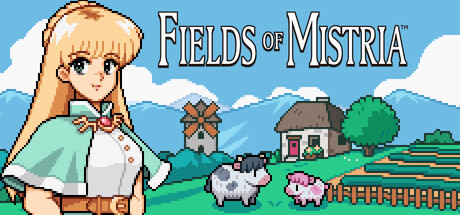
How to pace your first seasons in Fields of Mistria, split time between the farm, the mines and the villagers, set the game up for your PC, and use trainer options without spoiling the slow parts.
What the Game Asks of You
Fields of Mistria is NPC Studio's farm-sim RPG, built as a spiritual successor to the farming games of the late 1990s. After an earthquake damages the village of Mistria, the town hands you an overgrown homestead in return for helping with repairs, and strange magic starts showing up across the land. You farm, fish, mine, craft, raise animals, fight through ancient ruins for treasure, learn magic and get to know more than 30 villagers. The game reached 1.0 after a period in Early Access and has had a regular series of patches since launch.
Routine matters far more than speed here. Seasons turn, quests and festivals arrive when they arrive, and friendships build over many short visits. Expect to leave plenty undone in your first year, as with most games in the genre. Choose a couple of goals per season, like clearing one field, pushing further into the mines or befriending a few neighbours, and park the rest.
- Give each season a short list of goals rather than chasing everything.
- Keep the game updated; the 1.0.x patches fixed a number of bugs and crashes.
- Use the town restoration as the long-term thread that links your other activities.
Your First Days on the Homestead
The farm starts overgrown, so early days go mostly to clearing and planting. Tool use draws on stamina, so plan where you work before you start swinging. Clear a compact patch near the house, plant only what you can water without strain, and expand once watering stops taking your whole morning. Early on, a small plot you can keep up with earns more than a big one you can't.
Spend the rest of the day learning the village. Walk the streets, meet people and see what the shops and quest givers are after. In farm sims, early money usually comes from crops and foraged goods, with crafted or processed items paying better later. Avoid pouring everything into one area; keep some gold back for tool and home upgrades, since those make every following day more productive.
Watch the clock as well. Genre convention is that pushing too late into the night costs you something the next morning, so head home with time to spare and treat each in-game day as a short checklist.
- Water and harvest first, then go exploring.
- Grow your fields in steps you can actually maintain.
- Hold back some gold for upgrades instead of spending it all on seeds.
- Be home before the day runs out so the next one starts cleanly.
Mining, Fishing, Crafting and the Ruins
Farming covers your costs, while mining, fishing and crafting feed both the town restoration and your own upgrades. Mines in this kind of game tend to supply the materials for better tools and buildings, so a regular mining day each week keeps progress moving. Fishing is a quieter earner and a good way to fill quests when farm work doesn't suit the day.
The ancient ruins hold enemies and treasure. Prepare before going in: bring food or healing items, watch your health and turn back while you still have a margin. Magic unlocks as you progress and helps on the farm as well as in the ruins, so the story threads that lead to it are worth following.
Crafting connects the rest. Materials from mining and gathering become items that save time or sell for more than the raw goods. Before selling a stack, check whether a recipe or quest calls for it, because the thing you sold yesterday is often what you need tomorrow.
- Fit one mining or ruins trip into each week alongside farm work.
- Pack healing items before entering combat areas.
- Check recipes and quests before you sell materials.
- Chase the story leads that unlock magic; it pays off on the farm too.
Villagers, Romance and Festivals
Mistria has more than 30 villagers with their own stories, and 12 of them are marriage candidates. Friendships grow through regular contact, so speak to people as you pass and note how they react to gifts. A brief daily round of greetings adds up to more over a season than the odd big effort. In time you can marry the candidate you pick and start a family.
Each season brings new quests, festivals and changes to villager outfits. Festivals let you see a lot of people at once, and they are easy to miss if you lose track of the date, so look at the calendar when a season begins. Seasonal quests also point your planning: a request for a particular item tells you what to grow, catch or dig up next.
- Greet a few villagers every day instead of everyone now and then.
- Write down gift preferences as you learn them.
- Check the calendar at every season change for festivals.
Animals and Customization
Animals become a steady part of the farm once you can house them, and you can breed rare colour variants. They need consistent care, so bring them in when your routine has room for another chore, not the moment you can afford them. Start with a few, learn what they need, and add more once their care takes only a few minutes each morning.
You can customize your character, home and farm. Decorating early is tempting, but a practical layout pays back first: keeping crops, animals and storage close together cuts down on walking. Once the daily loop runs efficiently, build the look you want.
- Add animals only when your routine can take the extra work.
- Place crops, storage and animal buildings close together to cut walking.
- Hold off on decoration until your income is steady.
PC Settings and Performance
Requirements are modest. The minimum is 64-bit Windows 10 with an Intel Core2 Duo E6400 or AMD Phenom X2 Dual-Core GP-7730, 6 GB of RAM, a 1 GB GeForce GTX 460 or Radeon R7 240 and DirectX 11. The recommended spec raises that to a Ryzen 3 3300X, 8 GB of RAM and an RX 480. Both list 2 GB of storage, so most reasonably recent PCs and laptops should meet them.
Near the minimum spec, resolution is the first thing to lower, followed by whatever optional visual settings the menu offers. With 6 GB of RAM, close browsers and other background programs before launching, since memory is tight at that level.
At or above the recommended spec, native resolution should be a reasonable target. Patch 1.0.5 brought performance improvements, so if you had stutter on an older version, update before touching any settings. The game also has full controller support, DualShock and DualSense pads included.
- Update to the latest patch before adjusting settings.
- On weaker PCs, drop resolution first, then optional effects.
- Close background programs if you only have 6 GB of RAM.
- A controller works out of the box if you prefer one.
Using the Trainer in Fields of Mistria
The trainer options map closely onto the daily loop. Infinite Stamina removes the limit on tool use, Freeze Time stops the clock so you can finish a job before the day ends, and Game Speed shortens slow stretches. Instant Crop Growth, Unlimited Gold, Unlimited Items and Unlimited Materials cut out the grind for money and resources. Infinite Health and Infinite Mana cover the ruins and spellcasting, and Super Speed trims walking time.
Max Friendship and Skill XP Multiplier skip the slowest parts of the game, so think twice if you want the villager stories to play out at their own pace. Fields of Mistria is single-player, and the trainer is for offline, single-player use only. Back up your save before enabling anything. Because the game uses Steam Cloud, keep your own copy of the save folder as well; a modified save syncs like any other and can overwrite files on another machine.
- Back up your save before turning on any option.
- Enable options one at a time so you can see what each does.
- Use Freeze Time or Game Speed to ease chores, not to skip the story.
- Consider leaving Max Friendship off so the villager arcs unfold normally.
- Turn options off and update the trainer after each game patch.
FAQ
Is Fields of Mistria multiplayer?
No. Steam lists it as single-player, so you run the farm and help the village on your own.
How many characters can I marry?
Twelve of the more than 30 villagers are marriage candidates, and you can start a family with the one you choose.
Will it run on an older PC?
Probably. The minimum is a Core2 Duo-class CPU, 6 GB of RAM and a 1 GB GTX 460 or R7 240 on 64-bit Windows 10, with 2 GB of storage.
Can I play with a controller?
Yes. The game has full controller support, including DualShock and DualSense controllers.
Do my saves sync between PCs?
Yes, through Steam Cloud. Keep a manual backup as well, especially if you use a trainer.
Comments
No comments yet
Be the first to share your thoughts.