Manor Lords: Yeni Başlayanlar Rehberi ve En İyi Ayarlar
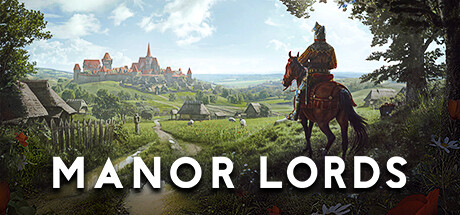
İlk Manor Lords kasabanı nasıl kuracağın, kışın halkını nasıl doyuracağın ve yeni bölgelere nasıl açılacağın; ayrıca zayıf donanımlar için PC ayarları ve hileyi dikkatli kullanma ipuçları.
What Kind of Game This Is
Manor Lords is a medieval city builder with a strategy layer, developed by Slavic Magic and still in Early Access. You start with a small village, grow it into a town by managing resources, production chains and your people's needs, and then push into neighbouring regions, sometimes by force. The setting draws on late 14th century Franconia. Slavic Magic models the game on how real towns developed and avoids fantasy tropes, and that choice shapes how homes, buildings and goods work.
Early Access means frequent change. The default branch is currently version 0.8.117, which added a new perk category, the Fishmonger artisan and the Dunghill. The release before it, Major Update 8, brought the Wide Valley, cows, cider and advanced construction. Balance moves between versions, so use this guide as a starting point and read the patch notes after each update before loading a save you care about.
- Turn the difficulty down for your first town while you learn the systems.
- You can save at any time, so rotate between several save slots.
- A mouse-only control option is available if you would rather not use the keyboard.
Your First Year: Town Layout
Building is gridless, with free placement and rotation. That freedom makes it easy to sprawl. Towns are meant to grow outward from a central marketplace, so pick its spot early and leave room around it. Roads carry more weight here than in most builders: housing areas are divided into plots according to the roads you draw and the space you assign, and homes scale to fit. Lay roads along the natural shape of the land rather than forcing awkward angles, and check the plot preview before you commit.
Residents build their own homes on the burgage plots you assign. Larger homes can take extensions at the back, where families grow vegetables, raise chickens or goats and cover needs your farms and workshops do not. Plot size is effectively a resource. Setting aside a few larger plots early keeps those backyard options open, while a row of cramped plots shuts them off. Getting the space right now costs far less than demolishing and rebuilding later.
- Place the marketplace first, then roads, then housing.
- Reserve some larger plots so homes have room for extensions.
- Keep work sites a short walk from their raw materials.
- Patch 0.8.111 restored the strong preference oxen with carts have for roads, so connect storage and work sites by road.
Food, Fields and the Seasons
Seasons set the pace of each year. Spring rains help crops, and winter snow shows whether you stored enough. Once housing is up, build a food supply that rests on more than one source. Place farms on fertile soil, put hunting grounds where animals gather, and treat home extensions as a buffer. Expansion pushes deer herds away, so hunting will likely shrink as your town grows and should not carry your food supply.
Soil fertility drops without crop rotation. Recent patches changed how resting a field works: a field with crops selected but nothing planted now recovers fertility as if it were fallow. Most of that recovery comes toward the end of the year cycle, so a short rest does far less than a full year. Version 0.8.117 also added the Dunghill, where assigned families collect dung and turn it into fertilizer for your fields.
- Check soil fertility before placing any field.
- Rest tired fields for a full year cycle, since most recovery arrives late in the year.
- Stock food before the first snow.
- Add a Dunghill once you are working several fields.
- Do not lean on hunting as your town grows.
Production Chains and Expansion
Goods range from boots and barley to hides and honey, and most have to be hauled and processed before they become finished products. You are always balancing basic needs against luxuries that keep people happy, trade goods for export, and arms and armor for your troops. Build one complete chain and watch it run before starting the next, because half-built chains tie up workers and materials while producing nothing. The new Fishmonger shows why: it needs both fish and salt delivered before it makes smoked fish.
Resources are scattered across the map, so a single settlement cannot cover everything. The game nudges you toward specialised settlements: mining colonies for ore, and villages for farming, herding or hunting. New regions cost influence, and the first big choice is iron or fertile land. If food is shaky, take the fertile region. If food is steady and you need tools and weapons, go for iron. Development perks add another set of decisions, and the Rural Foundations category, with six perks, unlocks at Settlement Level 3.
- Finish one production chain before starting another.
- Felling too many trees damages the environment, so harvest forests with restraint.
- Spend influence on whatever fixes your weakest need.
- Decide which perks you want before reaching Settlement Level 3.
Defending and Conquering
Conquest is one route to expansion, and you can forge arms and armor, but the store page says little about how battles play out. The advice here is general strategy sense rather than detailed combat tactics. The core point holds regardless: your army depends on your economy. Weapons and armor come out of production chains that need ore, workers and food, and a town that cannot feed itself will not keep an army in the field for long.
Fight when you are ready. Get the arms chain running well before a threat appears, avoid battles your economy cannot absorb, and do not pull so many people off their jobs that farms and workshops stall. Save before any major engagement so you can review what went wrong. Military balance may shift between Early Access versions, so revisit your habits after big updates.
- Save before every battle.
- Start arms and armor production early.
- Leave enough workers at home to keep food and production going.
PC Settings and Performance
Minimum specs call for 64-bit Windows 10, an Intel Core i5-4670 or AMD FX-4350, 8 GB of RAM and a GTX 1050 (2 GB), RX 460 (4 GB) or Arc A380 (6 GB), along with DirectX 12 and 15 GB of storage. The recommended tier moves up to an i5-7600 or Ryzen 3 2200G, 12 GB of RAM and a GTX 1060 (6 GB), RX 580 (8 GB) or Arc A580 (8 GB). Video memory shows the biggest jump between tiers, from as little as 2 GB to 6 or 8 GB, followed by system RAM.
Near the minimum, lower texture quality first, since a 2 GB card has little video memory to spare. Then cut the settings that usually cost most in 3D city builders, such as shadows, vegetation detail and draw distance, where the game offers them. If it still struggles, lower the resolution or use a scaling option if one is available. Larger towns tend to run slower, so settings that feel smooth in your first year may need trimming later.
Recommended hardware should give you room for higher textures and a sharper image. The extra RAM helps once a save has large settlements across several regions. Both tiers list quad-core CPUs, but simulation-heavy games lean harder on the processor as population and logistics grow, so close background programs during long sessions. An SSD usually shortens load times.
- On 2 GB graphics cards, lower texture quality first.
- Next, reduce shadows, vegetation and draw distance where the game offers them.
- With 8 GB of RAM, close browsers and other apps while playing.
- Retest your settings once your town gets large.
Using the Trainer in Manor Lords
The trainer offers Unlimited Treasury, Unlimited Regional Wealth, Unlimited Influence, Unlimited Materials, Instant Construction, Max Approval, Unlimited Development Points, Fast Production, Invincible Units, Infinite Unit Stamina, One-Hit Kills and Game Speed. Manor Lords is single-player, and the trainer is intended for offline, single-player use only. Frequent Early Access updates can break an option after a patch, so make sure the trainer matches your game version, currently 0.8.117 on the default branch.
Back up your saves before enabling anything. In a recent beta announcement, the developers put save corruption and crashes on load at the top of the issues raised in Steam reviews. They hope it is fixed, except for saves loaded from very old builds, but a manual copy costs nothing. Steam Cloud can also sync a modified save to your other PCs, so keep untouched copies of saves that matter.
The options work best as learning tools. Game Speed and Instant Construction let you test road and plot layouts quickly. Unlimited Influence lets you try different regions before committing to a real playthrough, and Unlimited Development Points let you compare perk choices such as the Rural Foundations category. Invincible Units and Infinite Unit Stamina let you study battles without losing a campaign.
- Back up your save folder before enabling any option.
- Use the trainer offline and in single-player only.
- Turn options on one at a time to see what each does.
- After each Early Access update, check that the trainer matches your game version.
FAQ
Is Manor Lords a finished game?
No. It is in Early Access, with version 0.8.117 on the default branch. Updates still add content, such as new perks, the Fishmonger and the Dunghill, and they also change balance.
Will Manor Lords run on a GTX 1050?
The GTX 1050 with 2 GB is on the minimum spec list. Expect to lower texture quality and other demanding settings, especially as your town grows.
Does Manor Lords have multiplayer?
Steam lists it as single-player only. Listed features include adjustable difficulty, saving at any time and Steam Cloud saves.
Will my old saves work after an update?
Recent patches targeted save corruption and crashes on load. The developers say problems can remain with saves from very old builds, so back up before updating.
How do I keep my fields fertile?
Rotate crops and rest tired fields for a full year cycle, since most fallow recovery comes near the end of the year. Once you are working several fields, build a Dunghill for fertilizer.
Yorumlar
Henüz yorum yok
Düşüncelerini ilk paylaşan sen ol.